The Science Behind Learning Through Play. Why It Works Better Than We Think
Children learn best when they are doing, experimenting, choosing and imagining. Yet in many classrooms and therapy rooms, play is still seen as something separate from real learning. In reality, play is the most powerful way to build thinking, communication and emotional skills.
What is it really?
Learning through play means using playful activities as the main route to developing skills. Play can be structured or free, but it always involves exploration, curiosity, interaction and active engagement. It turns learning into something children do with enthusiasm rather than something that happens to them.
Why It Matters in Education and Therapy
lay is not a break from learning. It is learning. Through play, learners practise communication naturally in meaningful contexts, develop problem solving by trying, failing and trying again and build motor skills through hands on movement, they also strengthen social skills during shared activities and improve emotional regulation in a low pressure environment
For learners with SEND, play reduces cognitive load. It removes the fear of being wrong. It invites participation at any level and celebrates small attempts as successes.
When children feel regulated, they communicate, engage and develop better. Play is one of the safest and most effective ways to create this state.
What we know so far
Play creates the conditions for what psychologists call a flow state, where learners feel absorbed, safe and motivated to continue. This intrinsic motivation leads to deeper engagement and longer periods of sustained attention. In early years and SEND settings, research shows that when tasks are framed as play, learners show more initiative, confidence and willingness to take part.
Play also lowers stress responses and supports emotional regulation, which is essential for learning readiness. It increases engagement, reduces avoidance behaviours and strengthens joint attention, a key building block for communication. Simple playful decision making supports early executive functioning and helps learners build resilience as they try, adapt and try again. Because play is driven by curiosity rather than pressure, motivation rises naturally.
Practical Strategies You Can Use Tomorrow
- Start with sensory regulation. Lights, gentle water spray, bubbles or rhythmic sounds can help learners settle before you move into a task.
- Follow the learner’s lead. If a learner becomes calmer when engaging with a certain color or sound, build your activity around that interest.
- Add movement in small, manageable ways. Reaching, tapping, or stepping builds motor skills and supports regulation without overwhelming the learner.
- Celebrate small attempts. Any sign of engagement is progress. This reinforces confidence and emotional safety.
At Cosmo we design for the realities of SEND learning. Our activities use light, sound and simple interaction to help learners regulate emotionally, understand cause and effect and stay engaged without feeling pressured. Playfulness is built into every element, supporting both regulation and skill development.
Real Classroom Story
In a specialist classroom, the teacher sets up the Cosmo Dots for a simple follow the light game. The aim is not mastery, but purposeful play that supports regulation and interaction.
A learner who often stays withdrawn watches from the side. The teacher taps a softly lit Dot and pairs it with a gentle sound cue. Another pupil copies. When the light shifts colour, the withdrawn learner reaches out and taps it. The instant multisensory feedback helps him realise something is happening and draws him into the activity.
The group settles into a calm rhythm. Learners take turns, follow colours, and anticipate the next cue. One begins vocalising for his turn. Another practises reaching with more intention. Everyone becomes more regulated and engaged without any pressure.

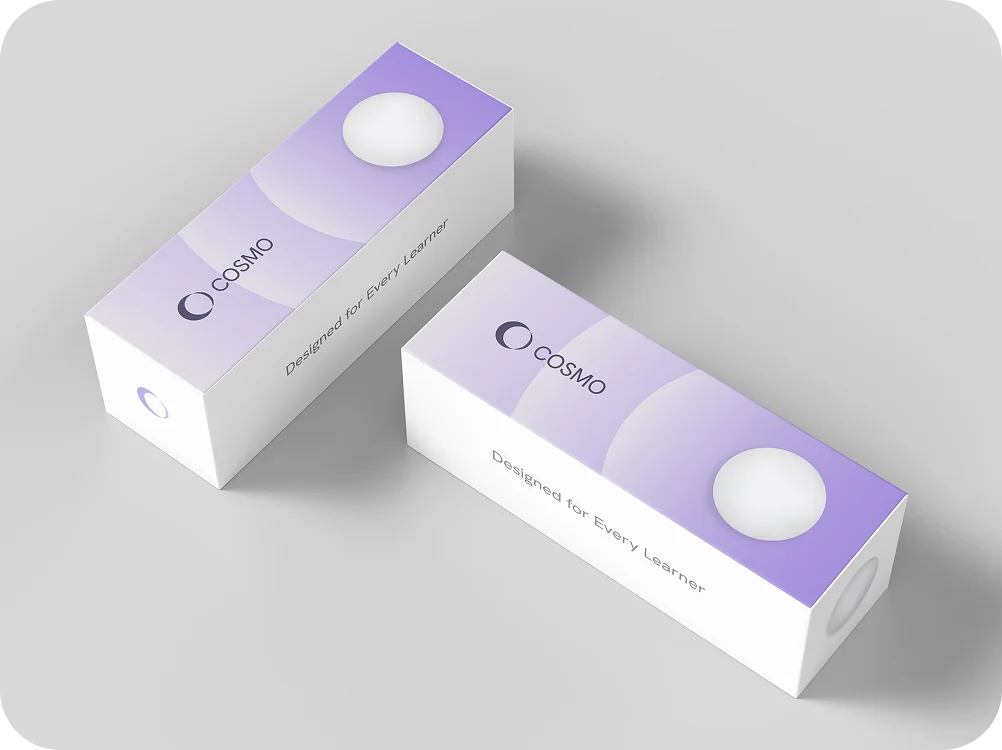

Through simple, multi-sensory play, Cosmo creates a safe space where learners connect, communicate and participate in ways that are often difficult in formal tasks.

Lorem Ipsum
Multisensory learning is not a trend. It is how the brain naturally understands the world. For many learners with PMLD, it is also the bridge that allows us to break through the communication wall. Sound or touch on their own may not be enough for a learner to realise that something is happening. When senses are combined, the world becomes clearer, and learners begin to respond, connect and come out of their shells.
Teaching through the senses does more than support engagement. It opens a doorway to interaction, confidence and real participation. Even the smallest sensory choices can create meaningful shifts in connection and progress.