
Ravensbourne Lyme Academy
Organisation’s bio: Lime Academy Ravensbourne is an all age special school which is part of the Lime Trust and based in Havering. We strive to ensure that every pupil has access to a bespoke learning pathway delivered through a multi-sensory approach. They work in multi-agency teams and in partnership with parents and carers to ensure a holistic approach to learning.
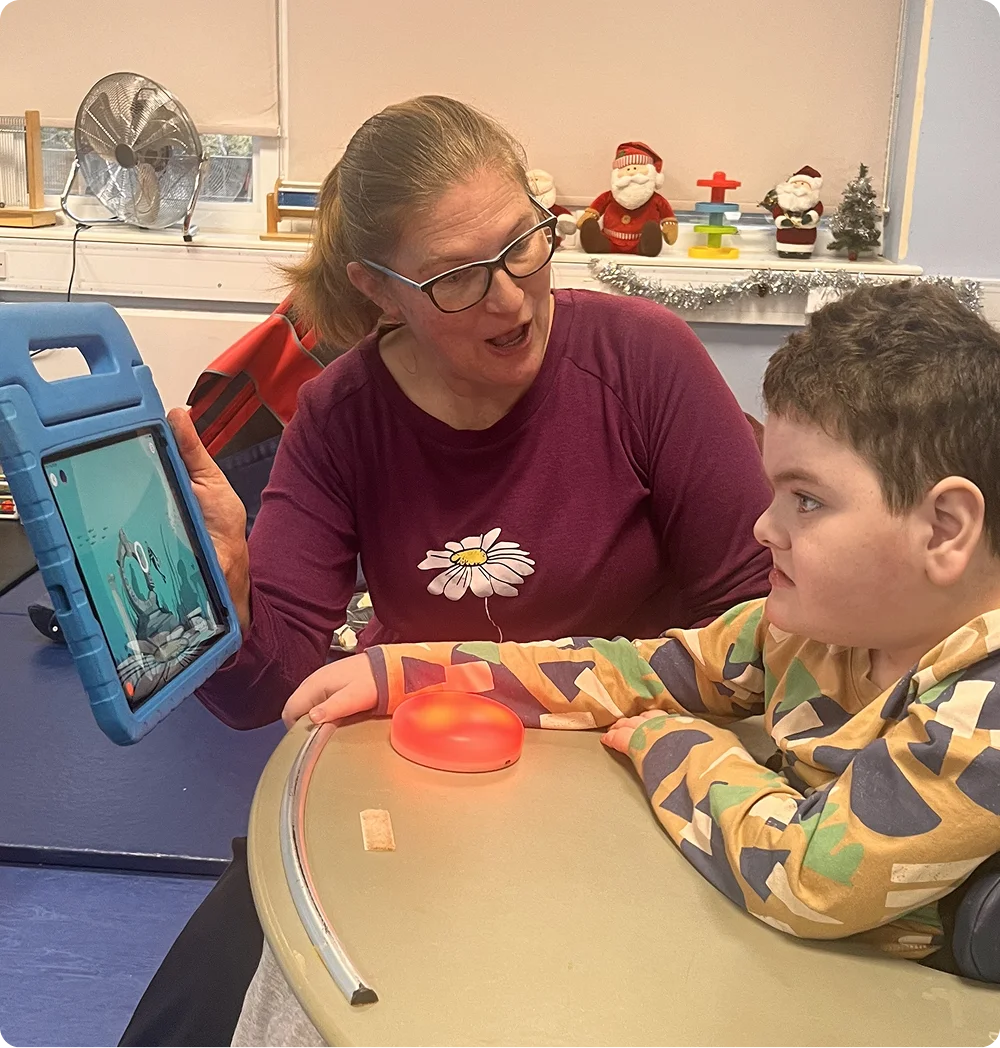
Ravensbourne Lyme Academy

0–19 years
Individual
Complex cerebral palsy Severe visual impairment Non-verbal communication Movement difficulties
Occupational Therapy
1 hour weekly session
How is Cosmo being used at Ravensbourne to support learner development?
Cosmo has become a core part of the academy’s play curriculum, supporting learners’ development across five key areas of the Engagement Model.
Teneille Dardis, Deputy Headteacher, shares:
“It really helps all our learners to engage in the five areas and their development.”
These include:
- Anticipation: Semi-formal learners practise turn-taking, while pre-formal learners develop waiting skills, anticipating a colour to appear.
- Persistence: Learners practise waiting for the colour response — encouraging pressing actions and delayed gratification.
- Exploration: Free play activities let learners make choices and express preferences.
One learner might always choose the green switch because they love that colour and completely reject the red switch.”
- Initiation: Learners begin activities independently in some classes, or initiate choices in others.
- Realisation: Activities offer immediate cause-and-effect feedback.
“I press this, I get that.”
The multisensory feedback is tailored:
- Visuals for hearing-impaired learners
- Sound for those with visual impairments
- Full multisensory experience for autistic learners
Teneille adds:
“It makes sessions engaging, fun and thoroughly enjoyable for all our learners.”
How has Cosmo helped with staff training and collaborative practice?
Cosmo has become a valuable tool for staff development and collaboration.
“I work across different classes, and it’s been great adjusting Cosmo sessions
to each group. It helps staff get confident with the different apps and switches.”
Training happens organically during sessions, with hands-on practice and experimenting after hours:
“The joy and enthusiasm are contagious. The kids pick up on our excitement
and get more engaged too.”
Staff also use Cosmo as a reason to come together:
“We’re constantly bouncing ideas off each other. What works in one class might
suit another. It’s making a real difference for the kids.”
In what ways has Cosmo enhanced social, motor, and teamwork skills?
In Hamilton Class:
- Learners use Cosmo for activities like Whack-a-Mole, improving fine motor skills and colour awareness.
- It’s encouraged group participation around a table, promoting turn-taking and collaborative play.
“It’s so nice to see them working together. It’s helped reduce distractions and supported behaviour management too.”
How has Cosmo supported PMLD learners and cause-and-effect learning?
In the PMLD class, Cosmo has enhanced cause-and-effect understanding through immersive activities. A teacher shared:
“We’ve seen our learners develop realisation skills — laughing, making eye
contact, vocalising when something happens.”
Fireworks has been particularly popular:
“The sounds and visuals have kept them engaged. It’s immersive and
meaningful for them.”
How have learners responded to Cosmo’s integration with 3rd Party Apps?
Busy Things (London Grid for Learning) integration has been a hit across all learner groups. Teneille Dardis highlights:
“Our learners absolutely love Busy Things — those little scary monsters. From
pre-formal to semi-formal learners, everyone can access it.”
Even learners without free arm movement can interact:
“They press the switch and see their favourite character appear. It’s brilliant for our older learners too, accessing Key Stage 1 and 2 games.”
What challenges did Ravensbourne face, and how were they overcome?
The staff identified two main challenges:
- Maintaining sustained engagement:
Larger, multisensory effects like full-screen visuals or longer music clips helped
maintain attention and reduce fleeting interest. - Supporting staff confidence:
Practical, hands-on training during sessions, and collaborative experimentation
after hours boosted confidence and creativity.
“When we’re enthusiastic, the kids pick up on it and get involved too.”
What overall impact has Cosmo had on learners and staff at Ravensbourne?
Cosmo has had a measurable and lasting impact across Ravensbourne Lyme Academy. It has:
- Enhanced anticipation, persistence, initiation, and realisation skills
- Improved social interaction, turn-taking, and teamwork
- Supported cause-and-effect understanding for PMLD learners
- Reduced classroom distractions and supported behaviour management
- Created opportunities for collaborative staff training and knowledge sharing
- Fostered a positive, joyful classroom atmosphere
“It’s not just a tool — it’s a catalyst for connection, development, and
creativity across the school.”