Communication Skills for Autism. Building Connection Through Simple, Predictable Practice
Many autistic learners communicate in ways that are subtle, individual and easy to miss. Progress rarely looks like long sentences or rapid back and forth conversation. More often, it begins with shared attention, small gestures, predictable routines and emotional safety. When we understand how communication develops for autistic learners, we can support it with far more intention.
Communicating for autism
Communication skills for autistic learners include much more than speech. They involve
looking, reaching or moving to show interest, using gestures or objects to communicate, anticipating routines and sharing attention with an adult.
Using AAC or simple signals and expressing needs through behaviour or sensory choices. Communication is any meaningful exchange that helps a learner connect with another person or express themselves.
Why It Matters in Education and Therapy
Autistic learners often need more predictable, low pressure and sensory friendly environments to communicate comfortably. When the communication demands are too high or unclear, learners may withdraw, mask or become overwhelmed.
A well supported communication environment helps autistic learners
- feel safe and regulated
- express needs without distress
- build trust with adults
- take part in shared activities
- reduce frustration and behavioural challenges
- develop early social understanding
Communication is not taught through pressure. It grows through connection.
What the Research Says
Research highlights that autistic communication develops more reliably when
activities are predictable and structured and learners are allowed time to process and respond.
Non verbal communication is valued as highly as verbal and interaction takes place within shared interests.
Studies also show that joint attention and co-regulation are strong predictors of later communication progress. Building these early skills through simple routines makes a meaningful difference.
Practical Strategies You Can Use Tomorrow
- Follow the learner’s focus.
If a learner is interested in spinning, lights or tapping, use that as the foundation for communication rather than redirecting them. - Use slow, predictable routines.
Tap and wait, light and pause. Predictability reduces anxiety and opens the door to interaction. - Give more processing time.
Extend your wait time. Many autistic learners need several seconds before responding. - Celebrate the smallest signals.
A glance, a reach, a sound or a shift in movement are all communication foundations. - Keep demands low during communication practice.
Focus on connection, not performance. - Use gesture and AAC alongside speech.
Pointing, touching, choices with objects, symbols or tech all count as communication.
Real Classroom Story
During a communication session, a teacher uses one Cosmo Dot with an autistic learner who usually avoids social interaction. She lights the Dot in a soft colour, taps it once and waits. After a few seconds, the learner shifts closer and touches it. The Dot responds with sound and colour, and the learner looks up briefly.
They repeat the loop several times. No spoken language is required. The learner initiates a small vocalisation on the next turn. It is a tiny moment, but it represents shared attention, processing, anticipation and connection. All through a simple, safe routine.
Cosmo supports early communication by offering clear sensory cues, simple routines and games that naturally encourage turn taking, anticipation and shared attention.

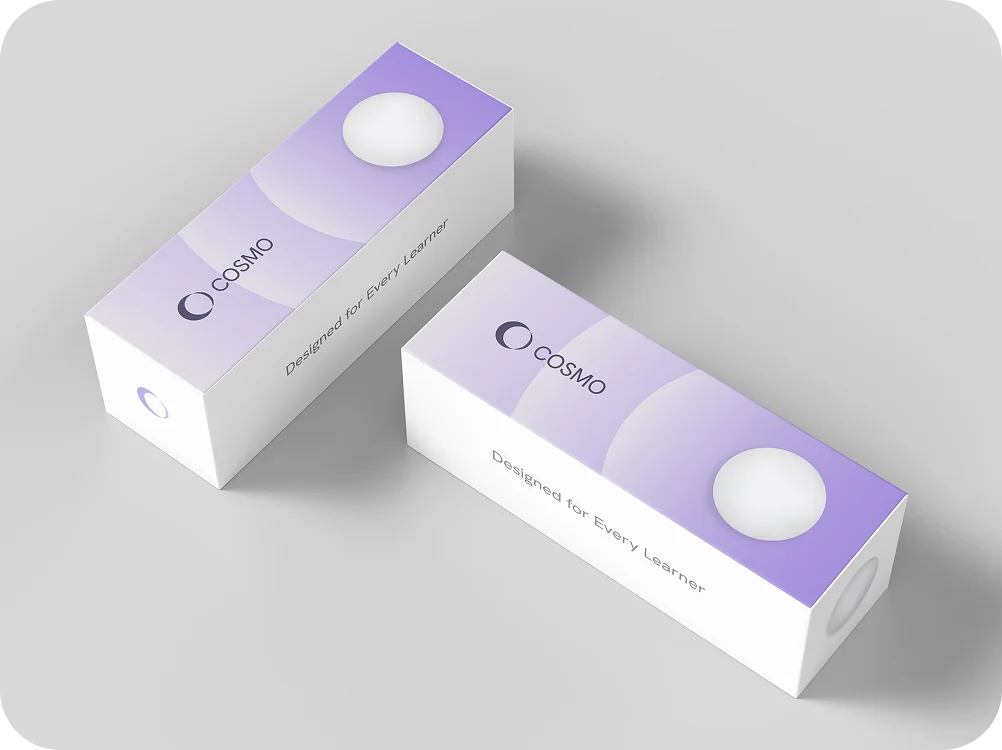

The multi-sensory feedback helps autistic learners understand when something is happening and gives them a safe way to respond.

Lorem Ipsum
Multisensory learning is not a trend. It is how the brain naturally understands the world. For many learners with PMLD, it is also the bridge that allows us to break through the communication wall. Sound or touch on their own may not be enough for a learner to realise that something is happening. When senses are combined, the world becomes clearer, and learners begin to respond, connect and come out of their shells.
Teaching through the senses does more than support engagement. It opens a doorway to interaction, confidence and real participation. Even the smallest sensory choices can create meaningful shifts in connection and progress.